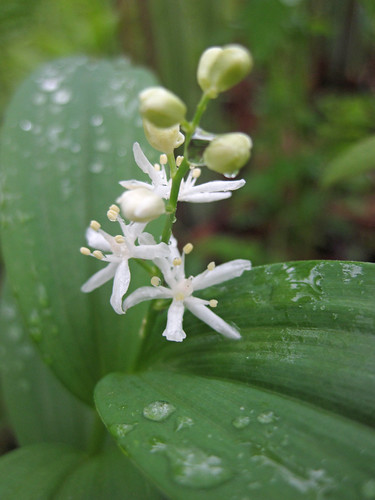
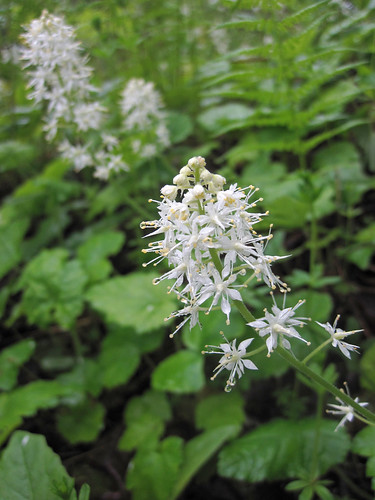
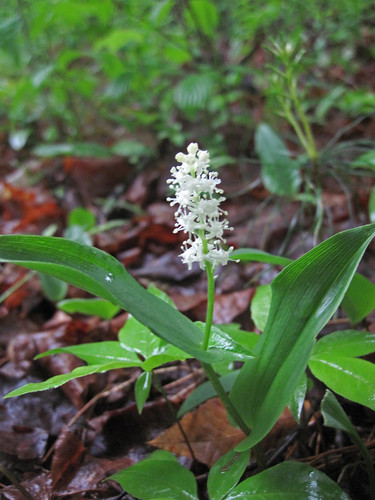
I know what you're thinking. It's Thursday. But the photos we're posting below were all taken yesterday, Wednesday, May 28 here at North Branch Nature Center. The theme for week's post is 'white'.
You won't find Canada Mayflower on most parts of the property, but under the hemlocks at 'Deer Camp' is a good place to see this elegant little forest flower!
Starflower is another flower that can be found at 'Deer Camp'. Most of the Starflower on the property is already a bit past its prime, but this blossom was still looking pretty sharp!
Starflower Solomon's Seal can be found tucked along the thickets near the river and is in peak bloom right now. Look for it soon, before it disappears under the Ostrich Ferns!
Foamflower is looking really good right now at NBNC! Look for it along the river, in peak bloom right now!
Thursday, May 29, 2014
Friday, May 23, 2014
The Devil's Cormorant: A Natural History
A guest post by author Richard J. King:
Hello North Branch Nature Center,
It's an honor to write a guest blog post, and I'm looking forward to coming up to the Montpelier area next Thursday night, 7pm, May 29th, to speak about my recent book The Devil's Cormorant: A Natural History. I'll be talking a bit about the biology and behavior of these birds--as much as people would like. Do you, for instance, know why cormorants spread their wings after fishing? (Hint: It does not have to do with any deficiency in natural oils.)
My background, however, is very much in literature and environmental studies. The cormorant is a perfect case study to examine how and why we rank certain animals over others. You might be familiar with some of the controversies over cormorants on Lake Champlain and on Lake Ontario, but I suspect you haven't heard about the killing of over 11,000 individuals by state-sponsored volunteer hunters in South Carolina this winter and spring.
Now, if these were goldfinches or eagles or egrets, you would have heard about this by now. Why, exactly, do cormorants get such a bad rap or at least disinterest? Is it their color, their lack of a pretty song, the way they stand and spread their wings? Or the way that they bring a larger fish to the surface and gulp it down conspicuously in front of fishermen? I argue that it is all of these things, but also a deep cultural antipathy for these animals that goes back to the Bible, Paradise Lost, and Shakespeare.
This book is a result of over a decade of research, and I traveled all over the world to see different cormorant species in their natural habitats (there are about 40 species globally), but also to study how different cultures across time have perceived this bird.
I hope you'll come out and join me, and I look forward to a lively discussion. If you'd like I will also draw a customized cormorant in each book with watercolor pencil. I've embedded three video clips below to wet your whistle.
Kindly,
Rich
A video clip from the phenomenal documentary titled He Dances for His Cormorants, about a Chinese man and his family who fishes with cormorants in China. He raises cormorants from eggs; the prize fishing birds are bred like Labrador hunting dogs.
A video clip from AFP/BBC about contemporary mining of guano off the coast of Peru. Cormorants in the nineteenth century were the primary producers of these hugely valuable commodity, and it's still harvested today.
Imperial blue-eyed cormorants; these birds have been monitored as diving more than 400 feet below the surface!
Hello North Branch Nature Center,
It's an honor to write a guest blog post, and I'm looking forward to coming up to the Montpelier area next Thursday night, 7pm, May 29th, to speak about my recent book The Devil's Cormorant: A Natural History. I'll be talking a bit about the biology and behavior of these birds--as much as people would like. Do you, for instance, know why cormorants spread their wings after fishing? (Hint: It does not have to do with any deficiency in natural oils.)
My background, however, is very much in literature and environmental studies. The cormorant is a perfect case study to examine how and why we rank certain animals over others. You might be familiar with some of the controversies over cormorants on Lake Champlain and on Lake Ontario, but I suspect you haven't heard about the killing of over 11,000 individuals by state-sponsored volunteer hunters in South Carolina this winter and spring.
Now, if these were goldfinches or eagles or egrets, you would have heard about this by now. Why, exactly, do cormorants get such a bad rap or at least disinterest? Is it their color, their lack of a pretty song, the way they stand and spread their wings? Or the way that they bring a larger fish to the surface and gulp it down conspicuously in front of fishermen? I argue that it is all of these things, but also a deep cultural antipathy for these animals that goes back to the Bible, Paradise Lost, and Shakespeare.
This book is a result of over a decade of research, and I traveled all over the world to see different cormorant species in their natural habitats (there are about 40 species globally), but also to study how different cultures across time have perceived this bird.
I hope you'll come out and join me, and I look forward to a lively discussion. If you'd like I will also draw a customized cormorant in each book with watercolor pencil. I've embedded three video clips below to wet your whistle.
Kindly,
Rich
A video clip from the phenomenal documentary titled He Dances for His Cormorants, about a Chinese man and his family who fishes with cormorants in China. He raises cormorants from eggs; the prize fishing birds are bred like Labrador hunting dogs.
A video clip from AFP/BBC about contemporary mining of guano off the coast of Peru. Cormorants in the nineteenth century were the primary producers of these hugely valuable commodity, and it's still harvested today.
Imperial blue-eyed cormorants; these birds have been monitored as diving more than 400 feet below the surface!
To Be a Black-capped Chickadee
In the morning and evening these days, the spring air is filled with bird song. The leaves are waking up and many birds have built, or are in the process of building, nests. At Forest School, as songsters offered up music to our ears, students experienced themselves as Black-capped Chickadees in spring. They learned about behavior and nest building through the age old tradition of listening to an oral story and then pretending to be Chickadees; establishing territory, finding a nest site, and building their nests.
Oral story telling can be a powerful way to teach. It offers a rich experience for both story teller and listener. Oral story telling brings youngsters into their imagination and delivers information in a way that is engaging and easily absorbed. Children just love stories! Story telling also offers teachers an opportunity to be fully present with the whole group, creating something out of their imagination just for the students.
On this day, as a Black-capped Chickadee sang his spring song close by, I shared an oral story about a male Chickadee named Harry who met a female named Sally. The story was fun and sometimes silly yet interlaced with details specific to chickadees and their process of nest building. Eyes were wide as the tale was told. Alive in their imagination from story telling, the group was ready to become Black-capped Chickadees.
Pretending and imaginary play is often a wonderful way for young children to learn. A child can embody the learning and easily connect with the subject in a personal and meaningful way. These Forest Schoolers were excited and fully engaged as they became Black-capped Chickadees. They set off in pairs; one the male and the other the female. After locating a nesting site and gathering materials, the female Chickadee crafted a nest. While she was focused on her task and working hard, the male Chickadee of the pair searched for and delivered food to keep up her energy. Our male Chickadee Forest Schoolers found actual worms and grubs! Thank you to Angie Barger, Curriculum Coordinator at the North Branch Nature Center, for developing a fantastic lesson.
Oral story telling can be a powerful way to teach. It offers a rich experience for both story teller and listener. Oral story telling brings youngsters into their imagination and delivers information in a way that is engaging and easily absorbed. Children just love stories! Story telling also offers teachers an opportunity to be fully present with the whole group, creating something out of their imagination just for the students.
On this day, as a Black-capped Chickadee sang his spring song close by, I shared an oral story about a male Chickadee named Harry who met a female named Sally. The story was fun and sometimes silly yet interlaced with details specific to chickadees and their process of nest building. Eyes were wide as the tale was told. Alive in their imagination from story telling, the group was ready to become Black-capped Chickadees.
| An excellent nesting site is discovered by several chickadees. The birds use imaginary play to work through a territorial dispute. Finally, one pair is driven off and finds another suitable site. |
Pretending and imaginary play is often a wonderful way for young children to learn. A child can embody the learning and easily connect with the subject in a personal and meaningful way. These Forest Schoolers were excited and fully engaged as they became Black-capped Chickadees. They set off in pairs; one the male and the other the female. After locating a nesting site and gathering materials, the female Chickadee crafted a nest. While she was focused on her task and working hard, the male Chickadee of the pair searched for and delivered food to keep up her energy. Our male Chickadee Forest Schoolers found actual worms and grubs! Thank you to Angie Barger, Curriculum Coordinator at the North Branch Nature Center, for developing a fantastic lesson.
| A pair of busy chickadees show off their tree cavity nest built with moss and sticks at the base and a lining of soft fuzzy materials. |
| A cozy nest for eggs and hatchlings safe in a tree cavity! |
| Chickadees gathered back together for sharing about their experience and refueling after a fun filled morning. |
Tuesday, May 6, 2014
Youth Birder Writes Guide to Caribbean Birds
A guest post by former NBNC youth birder, Aly DeGraff:
As a Vermont native, I grew up attending the Vermont Audubon Youth Camp at High Pond and participating in the World Wide Series of Birding youth team through the North Branch Nature Center. Banding birds was one of the coolest things I had ever done as a 10-year-old and wandering around Cape May, New Jersey at the wee hours of the morning trying to identify birds with a bunch of other middle schoolers made us feel like bird detectives.
Skipping ahead 10 years, I've continued to fuel this excitement for conservation and the natural world which started with this Vermont community. I graduated from Middlebury College in February 2011 and received a prestigious fellowship from the Compton Foundation to complete a self-designed participatory mapping project in the Caribbean. The transboundary Grenadine islands are divided between the small island developing states (SIDS) of St. Vincent and the Grenadines and Grenada, and derive their economies largely from foreign tourism and fisheries. These 50+ islands and cays (the largest of which is only 32 sq km) are biologically rich and diverse, yet extremely fragile and vulnerable to environmental change and developmental pressures. My research involved the collection of data on important historical, cultural, and ecological heritage sites for use in the countries’ joint application for designation as a mixed (natural and cultural) marine transboundary UNESCO World Heritage Site. I worked closely with local communities and organizations to create a comprehensive local knowledge database of over 325 sites through interviews, community meetings, and workshops, as well as intensive fieldwork across 26 islands and cays. This information filled data gaps and served to strengthen the current joint application of St. Vincent and the Grenadines and Grenada as a mixed (natural and cultural) marine transboundary UNESCO World Heritage Site. It was the experience of a lifetime!
At the end of my fellowship, I wanted to continue giving back to these communities who had been so open to working with me, so I teamed up with my ethnobiologist/ornithologist friend, Juliana Coffey, to create a comprehensive, user-friendly avian field guide, which includes scientific and local ecological knowledge (LEK) and folklore from Grenadine citizens, and showcases a collection of photographs taken within the Caribbean. In an area where there is an increasingly intense demand for such little space, we strive to encourage both foreign and community-driven stewardship of species and their habitats. This guide will be a valuable resource for training local bird monitors, educating the general public, promoting sustainable tourism initiatives, enhancing the overall conservation and management of Grenadine resources, and will be useful to both locals and foreigners with an interest in the avifauna of the region.
The Grenadines are straight down the Atlantic Flyway from Vermont, so it's exciting to write about and see birds like Belted Kingfishers and Barn Swallows in this tropical environment next to the Caribbean birds, especially when you get to learn their local names (e.g. Barn Swallows are called weather birds). If anyone is interested in more information about this project, the Grenadines, and birds, please feel free to visit our website: Birds of the Transboundary Grenadines or contact us directly at grenadinesbirds@gmail.com, we'd love to hear from you!
As a Vermont native, I grew up attending the Vermont Audubon Youth Camp at High Pond and participating in the World Wide Series of Birding youth team through the North Branch Nature Center. Banding birds was one of the coolest things I had ever done as a 10-year-old and wandering around Cape May, New Jersey at the wee hours of the morning trying to identify birds with a bunch of other middle schoolers made us feel like bird detectives.
Skipping ahead 10 years, I've continued to fuel this excitement for conservation and the natural world which started with this Vermont community. I graduated from Middlebury College in February 2011 and received a prestigious fellowship from the Compton Foundation to complete a self-designed participatory mapping project in the Caribbean. The transboundary Grenadine islands are divided between the small island developing states (SIDS) of St. Vincent and the Grenadines and Grenada, and derive their economies largely from foreign tourism and fisheries. These 50+ islands and cays (the largest of which is only 32 sq km) are biologically rich and diverse, yet extremely fragile and vulnerable to environmental change and developmental pressures. My research involved the collection of data on important historical, cultural, and ecological heritage sites for use in the countries’ joint application for designation as a mixed (natural and cultural) marine transboundary UNESCO World Heritage Site. I worked closely with local communities and organizations to create a comprehensive local knowledge database of over 325 sites through interviews, community meetings, and workshops, as well as intensive fieldwork across 26 islands and cays. This information filled data gaps and served to strengthen the current joint application of St. Vincent and the Grenadines and Grenada as a mixed (natural and cultural) marine transboundary UNESCO World Heritage Site. It was the experience of a lifetime!
![]() |
| Getting community feedback on marine spatial planning maps |
![]() |
| Flyways and Grenadines Reference Map in the Guide |
The Grenadines are straight down the Atlantic Flyway from Vermont, so it's exciting to write about and see birds like Belted Kingfishers and Barn Swallows in this tropical environment next to the Caribbean birds, especially when you get to learn their local names (e.g. Barn Swallows are called weather birds). If anyone is interested in more information about this project, the Grenadines, and birds, please feel free to visit our website: Birds of the Transboundary Grenadines or contact us directly at grenadinesbirds@gmail.com, we'd love to hear from you!
Wednesday, April 30, 2014
Children on the Move with Sticks
Sitting in the corner of my porch I have a walking stick that was given to me as a present for my high school graduation. It's a beautifully hand painted stick that resembles a Common Loon. My art teacher made it for me upon request by my mom. I was heading off to college in the fall, north into the Adirondacks. I think my mom felt I'd be better equipped to stave off bears and conquer steep mountains with it in my hands while on my journey into adulthood. That walking stick has been so many places with me and holds many adventuresome stories. Much like the stories I see the young children creating every week in ECO.

This spring at two participating ECO schools, Moretown Elementary and East Montpelier Elementary, we decided to "branch out" and leave the safety of our warm and worn base camps. What does the local landscape have to offer a group of traveling students? We found the prompt we needed to select and carve our walking sticks.
Children searched the forest eagerly for their very own walking sticks. Height, thickness, strength, and weight were all serious considerations. How long should it be? Just shoulder height. How thick should it be? Well,...it shouldn't be too heavy to carry! How strong should it be? As strong as your journeying spirit will take you. Interestingly enough, all the children chose sticks that in one way or another really represented themselves. Slight yet strong, curvy, gnarled and full of detail, dense and strong. All of them beautiful.
We used various tools to help craft our walking sticks. Saws for cutting. Whittling peelers for adding fine detail. A shave horse and draw knife to take off bark and bring the wood grain to life. A drill for holes to make a decorative lanyard. Some children even added a few finishing touches with paint. The students were incredibly focused on and dedicated to their walking sticks. So much that they immediately wanted to take them home. Their teachers promised, on the last day of school, they could. Hooray!
On the last day of April, students at EMES headed to the East Montpelier Trail system for their first adventure. The chilly day proved challenging. We learned to switch hands and hold the walking stick while the other is getting warm in a coat pocket. We learned that we still need hats in May. Many children soon discovered that things are not as they seem when hiking,...no, we are not almost to Burlington!
Children used their sticks to poke mud puddles, climb over fallen trees, carry their snacks slung over their shoulders and draw pictures in the dirt. Our dedicated teacher team brought along Green-Up Day bags and we picked up garbage on the last leg of the journey. Leaving Vermont green for all to see.
Two hours later we were back at East Montpelier Elementary with plans for our next ECO outing. We might gather wild leeks for soup or head into a neighbors forest in search of vernal pools. What stories will our walking sticks have to tell?

This spring at two participating ECO schools, Moretown Elementary and East Montpelier Elementary, we decided to "branch out" and leave the safety of our warm and worn base camps. What does the local landscape have to offer a group of traveling students? We found the prompt we needed to select and carve our walking sticks.
Children searched the forest eagerly for their very own walking sticks. Height, thickness, strength, and weight were all serious considerations. How long should it be? Just shoulder height. How thick should it be? Well,...it shouldn't be too heavy to carry! How strong should it be? As strong as your journeying spirit will take you. Interestingly enough, all the children chose sticks that in one way or another really represented themselves. Slight yet strong, curvy, gnarled and full of detail, dense and strong. All of them beautiful.
We used various tools to help craft our walking sticks. Saws for cutting. Whittling peelers for adding fine detail. A shave horse and draw knife to take off bark and bring the wood grain to life. A drill for holes to make a decorative lanyard. Some children even added a few finishing touches with paint. The students were incredibly focused on and dedicated to their walking sticks. So much that they immediately wanted to take them home. Their teachers promised, on the last day of school, they could. Hooray!
![]() |
| Using a shave horse and draw knife |
![]() |
| On the Road |
![]() |
| Staying together is safe and FUN! |
Children used their sticks to poke mud puddles, climb over fallen trees, carry their snacks slung over their shoulders and draw pictures in the dirt. Our dedicated teacher team brought along Green-Up Day bags and we picked up garbage on the last leg of the journey. Leaving Vermont green for all to see.
Two hours later we were back at East Montpelier Elementary with plans for our next ECO outing. We might gather wild leeks for soup or head into a neighbors forest in search of vernal pools. What stories will our walking sticks have to tell?
![]() |
| Passing through a cornfield |
![]() |
| Can't go around it, can't go under it, gotta go through it! |
![]() |
| Earth Caretakers |
![]() |
| Good conversation on the trail. |
Tuesday, April 29, 2014
Choice and the Power of Play
| I have a vivid memory of wandering to a dirt pile behind my house and making mud pies when I was a child. I had buckets of water from the hose to wet the dirt for molding. I distinctly remember the joy of sprinkling dry sand on top of pies as sugar and meticulously decorating with flowers. The sand was warm, soft, and white and felt so pleasant slipping through my fingers. As I look back now, I realize how powerful that simple experience was. By playing in the dirt that afternoon, I was engaged in a self directed activity and fully in my senses. I was developing my imagination and learning about my world and myself. At Forest Preschool this April, the wee ones have been doing just the same; choosing how and what materials to engage with and learning about their world and selves through play outdoors. |
| Small animal home builders create a cozy space in a tree cavity with a variety of natural materials! |
| This gatherer realized her bird nest material also made a beautiful bouquet. |
Monday, April 28, 2014
Garganey in Vermont!
![]() |
| Garganey (right) flapping its wings in Burlington, VT. |
During spring migration, birds sometimes get lost, either
from being blown off course by storms or flying the wrong direction when their internal
compass fails them. In some instances, they get very lost. That was the case
for a Garganey, a Eurasian species of duck that ended up in a flooded cornfield
in Burlington, VT this week. Discovered yesterday by Taylor Swanson at the
Ethan Allen Homestead, Garganeys normally breed throughout Europe and Asia above the 45th
parallel. It is a migratory species, overwintering in parts of northern and
central Africa, India, and China.
Sibley’s Field Guide to Birds describes the Garganey as a “very
rare visitor” with most North American sightings “mainly from March to June and
mostly of males among groups of Blue-winged Teal on marshy ponds.” According to Birdwatching in Vermont, there was a
sighting of a Garganey in Vermont in 1988, when an adult male spent over two
week at East Creek in Orwell. But with
the flood waters receding at the Ethan Allen Homestead and an eager Peregrine Falcon on the prowl for prey,
this Garganey probably won’t stick around for too long!
![]() |
| A map of where the Garganey was sighted via Allan Strong |
![]() |
| Garganey (second from the left) in Burlington, VT |
![]() |
| Map of Garganey sightings in the US from eBird. Click the map to visit this interactive map in eBird and see more details. |
Subscribe to:
Posts (Atom)