|  Home  |   About us  |   Programs & Projects  |   Calendar  |   Birding  |   Blog  |   Get Involved  |

Tuesday, December 13, 2011

Vermont Christmas Bird Counts


Birdwatchers across the western hemisphere are filling their feeders and dusting off their binoculars for the 112th annual Christmas Bird Count (CBC). In Vermont, over a dozen counts will take place, with volunteers spreading out across the pre-determined study-area in an effort to census the winter bird population, leaving no chickadee uncounted. Some counts have taken place for decades, allowing scientists to learn how bird populations are changing over time. In fact, the large, long-term dataset created by the CBC is now used by the EPA as one of their major indicators of global climate change.

Last year, over 60,000 people took aprt in 2,160 counts across 31 countries/territories, setting records. The success of the CBC is due in a large part to the masses of volunteers who count birds for the sake of fun, science, and tradition. Most counts conclude with a potluck dinner, with rarities seen throughout the day being kept secret until everyone is gathered together, so they can be properly boasted. Most counts also welcome new participants, so if you’ve never taken part before, make this holiday season your first and come count some birds!

More info about the Christmas Bird Count


2011/12 VERMONT COUNTS:


Barnet
Jan. 1
Contact: Charlie Brown
cbrowne@fairbanksmuseum.org

Bennington
Dec. 28
Contact: Bonnie Dundas
kinglet@sover.net

Brattleboro
Dec. 17
Contact: Al Merritt
chpmnkx@sover.net

Burlington
Dec. 18
Contact: Shirley Johnson
rjsj489@comcast.net
Compiler: Eric Lazarus
ericlazarus@myfairpoint.net

Champlain Islands/St. Albans
Dec. 18
Contact: Liz Alton
redbnuthatch@gmail.com

Ferrisburgh
Dec. 17
Contact: Mike Winslow
mikekira@myfairpoint.net

Hanover-Norwich
Jan. 1
Contact: Daniel Crook
daniel.crook@hitchcock.org

Hinesburg-Huntington
Dec. 31
Contact: Paul Wieczoreck
mgcpw@gmavt.net

Island Pond
Dec. 15
Contact: Jayson Benoit
jayson@northwoodscenter.org

Mad River Valley/Northfield
Dec. 16
Contact Pat Folsom
pfols@gmavt.net

Middlebury
Dec. 18
Contact: Jim Andrews
jandrews@middlebury.edu

Mt. Abraham
Dec. 17
Contact: Randy Durand
durand@gmavt.net

Plainfield
Dec. 17
Contact: Chip Darmstadt
chip@NorthBranchNatureCenter.org

Randolph Area
Dec. 17
Contact: Rick Enser
rickenser@yahoo.com

Rutland
Dec. 31
Contact: Roy Pilcher
shamwariVT@aol.com

Saxton's River
Dec. 17
Contact: Don Clark
sapsbks@sover.net

Springfield
Dec. 18
Contact: Hugh Putnam
putnams@vermontel.net

Winhall/Windham
Dec. 17
Contact: Ruth Stewart
birder_rws@hotmail.com


Woodstock

Dec. 28
Contact: Sally Laughlin
laughlin@sover.net

Monday, December 12, 2011

Antique Bird Names

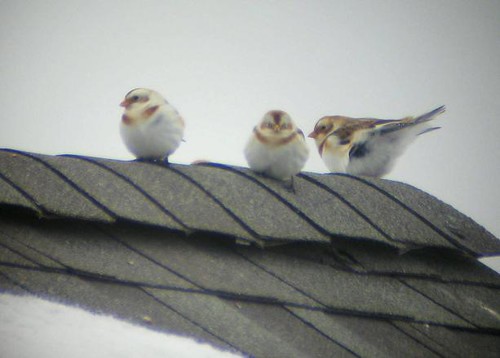
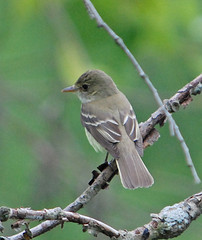
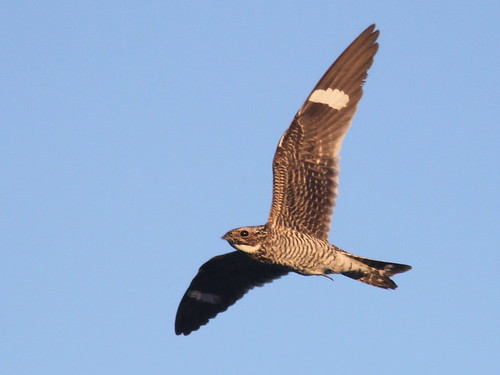
Ever see a flock of snowflakes fluttering above a snowy field? How about bullbats cruising over dimly-lit city streets? Or, have you ever seen a sparrow hawk perched patiently on a telephone line? Even sharp birders may not recognize some of these as archaic bird names. All languages evolve over time, but it seems that that bird nomenclature has a relatively short half-life. Bird names change for many reasons, but here are a few of our favorite archaic bird names:


Snowflake – It isn’t too far of a stretch to picture a flock of Snow Buntings over a snowy field and think “snowflakes”. In fact, at the turn of the century this is how Snow Buntings were referred to. When I was first reading through results of the 1906 Christmas Bird Count, I thought the reference to “about a dozen” snowflakes as some kind of old-fashioned birding joke, but in fact, this was an accurate report, given the lingo of the time.

Traill’s Flycatcher – Some of the more exciting name-changing events for birders are when species are split, and one name becomes two. Named after Thomas Stewart Traill, a Scottish professor of medical jurisprudence and promoter of zoology and natural history in the early 1800’s, this nondescript gray-and-white bird became two in 1973. Now known as either Willow or Alder Flycathers, the two species are nearly indistinguishable by sight, but have different songs and habitat preferences. Sometimes, when birders see one of the pair but don’t hear their song, a bird will still be given the ambiguous label of “Traill’s”.

Sparrow Hawk – … is neither a sparrow nor a hawk, so some explanation is warranted! This out-of-date term was used to refer to the American Kestrel, who’s diminutive size derived the “sparrow” part of its name. But the “hawk” part just didn’t fit, as kestrels are a type of falcon, not hawk, and so the name was officially changed in 1973. Many raptors names have similar delineation, and terms such as Fish Hawk, Pigeon Hawk, Marsh Hawk, Duck Hawk, and others still surface from time to time.


Bullbat – Birds that spend much of their lives near people tend to collect a plethora of pseudonyms, and so it is not surprising that a bird that nests on rooftops would be given a nickname. Even the official name “Common Nighthawk” is a bit of a misnomer, as these birds are neither hawks nor are they strictly nocturnal. Others may know the Common Nighthawk better as a “bullbat”, which is a more fitting term. The birds are erratic and bat-like in flight, and cruise over city streets at dusk, feeding on insects. But anyone who has seen a Nighthawk display during the breeding season knows why they call them "bull". Nighthawks will dive bomb other creatures that wander too close, including people, complimenting their bat-like flight with the attitude of a bull.

What are your favorite Antique Bird Names?

Monday, November 21, 2011

Rare Hummingbird Visits Vermont

By mid-November, most of the hummingbird feeders in Vermont have been taken down for the season (or the sugar-water has frozen solid), but a feeder in East Arlington, VT continues to be visited by a very cold, very lost hummer!

On November 19, Randy Schmidt of the The Vermont Bird Place & Sky Watch, in
Manchester Center, received a call from a concerned customer who's "Ruby-throated Hummingbird" hadn't yet flown south. As word of this unusual sighting spread throughout the birding community, many began to wonder whether this could be a rare, vagrant hummingbird species. By mid-September, most Ruby-throated Hummingbirds have vacated Vermont for warmer climes, but during this fall/winter period, other species infrequently stray far from their wintering grounds and end up in very unusual places. When they do, they will often find a lingering feeder which they will stake out as their own.


This appears to be what happened in East Arlington, where the vagrant hummingbird has apparently been residing for weeks. It is believed to be of the genus Selasphorus, although a trained hummingbird bander will be visiting tomorrow to more thoroughly document this individual and identify its species. Needless to say, Vermont birders are very excited to have such an unusual avian visitor in our state, and will be anxiously following developments on this sighting.

Monday, November 14, 2011

When Birds Share the Feeder


Anyone who has ever fed birds has likely provided food to a host of other types of creatures. An uninvited squirrel can empty a bird feeder quickly and scare away its intended avian visitors. If only we could just hang a bright, shiny sign on our feeders that says "BIRDS ONLY"...

Of course, different people have different attitudes towards bird feeding and while some recoil when a squirrel partakes in the feeding, others welcome critters of both feather and fur. After all, finding food in winter is difficult for all animals, not just birds. And despite our greatest efforts to deter them,nothing seems to stop determined animals from getting the seed they want.


Here in Vermont, we need to be especially vigilant, as bears can be both a nuisance and a potential threat to safety and property. In areas where bears are present, feeders should not be hung until prolonged cold has sent the bears into hibernation. Other unwelcome visitors, like hawks, will readily prey on the very birds you are trying to help.

What different non-avian creatures have visited your feeder? And how do you feel about feeding creatures of all shapes and sizes?

Monday, October 31, 2011

An eBird Milestone for NBNC

In addition to costumes and candy, there is other cause for celebration this Halloween. The North Branch Nature Center now has data in eBird for all 52 week-periods of the year! eBird is a massive online bird sightings database, and the missing info from the third week in October was a gap as obvious as a missing front tooth, which has now been filled. Beyond personal interest, eBird has tons of practical implications for avian conservation, allowing scientists to use observations from thousands of bird watchers to study bird distribution and abundance.
While in reality this is not a major milestone, it represents an increased effort by bird watchers everywhere to record what they see and share those observations with scientists and the general public. The current year (2011) marked a particularly deliberate uptick in eBird activity. The Vermont County Quest enlisted birdwatchers from throughout the state in a competition to see which county had “the most birds”, using eBird as a platform for measuring success. The results have been self-evident. Here in Washington County, eBird users have submitted 1642 checklists, a 58% increase from last year at this time.

As an example of the tremendous power of eBird, check out the links below, and the animation of the annual Chestnut-sided Warbler migration, generated using advanced computer models and eBird data:

Vermont eBird homepage
eBird tutorial
eBird bar chart for the North Branch Nature Center
eBird bar chart for all of Washington County, VT
Washington County Birding Challenge


Click here for more info and an interpretation of this computer-generated animation based on eBird data.

Thursday, October 13, 2011

Discovering Rarity

Last week’s blog post featured the second Vermont record for caterpillars of the Giant Swallowtail caterpillars, and the northernmost sighting of this species in the state. Abby Colihan found them while working in the garden in her backyard. But how did Abby ever know to think they might be rare? How many rarities like this are overlooked? And how might you, too, discover a rare critter in your own backyard?
Whether it be bird, butterfly, or anything else, a few simple tricks can help reduce the chances that some scarce critter wanders across your gaze undetected.

1) Get outside and look! Pay attention to what’s around you. The more you are out observing nature, the better a feel you will get for what is common and what is not. It doesn’t take studying the names of critters to recognize them… or to recognize that they are unfamiliar.

2) Expect the unexpected. Rare creatures show up every year in Vermont, and chances are, most go unnoticed. David Sibley has blogged about this phenomenon, and has even put a percentage to the rare birds that go unseen. You can’t find what you’re not looking for!

3) Document what you see. If something looks unfamiliar, take a picture! Digital photography has revolutionized the way we can record the natural world, and as a result, many more rare critters are being not only seen, but confirmed.

4) Share your observation! So many times, a rare bird is discovered to the delight of some ecstatic birder, only for them to hear from a neighbor that “it’s been there for weeks!” Call or stop by your local Nature Center, seek out an email list or discussion forum, or swing by your local extension office. You’re likely to find plenty of amateur and professional naturalists who are happy to help you identify your discovery.

The above steps will certainly not guarantee that you find a rare critter. Most people don’t (that’s what makes them rare). But, chances are, when a vagrant bird shows up at your feeder, you'll be more likely to take note. So get outside, observe the wild things around you, pay attention, and you just might discover the next Giant Swallowtail.

As a final primer for your search for rarity, enjoy the following awareness test:

Tuesday, October 4, 2011

A “Giant” Backyard Discovery

It was a day just like any other. Except that when Abby Colihan glanced out the window of her home into her garden, she noticed something different. It looked like a very large pile of bird guano, but upon closer inspection, Abby discovered it to be a caterpillar like none she had ever seen before.


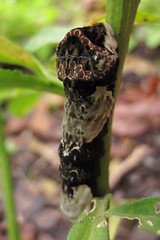
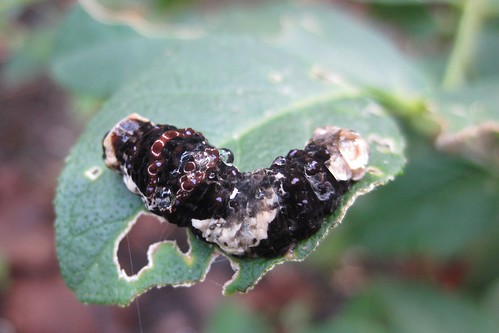
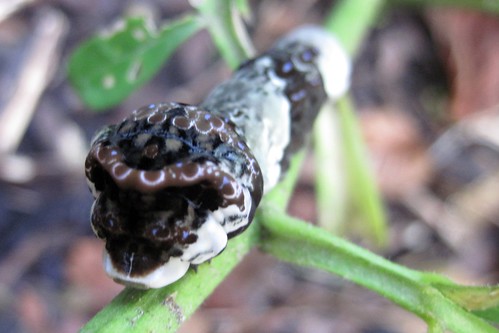
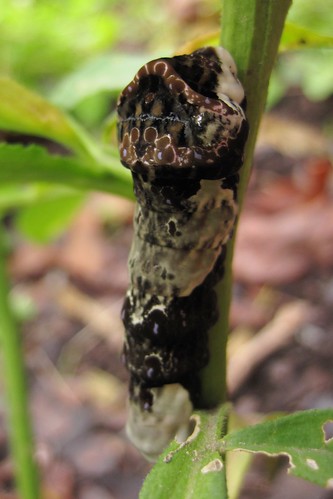
The caterpillar was that of a Giant Swallowtail, a species that before July 30, 2010 had never before been seen in Vermont! This distinctive butterfly is similar in size to our Tiger Swallowtail butterfly with a striking mixture of black and yellow, with dashes of blue and red. Larvae feed on plants in the citrus family (Rutaceae) and resemble bird droppings from above (see picture above). Get up close to one, and it will try to fool you into thinking it is a snake (see picture below). If you still dare mess with this caterpillar, it will reveal its large antennae-like osmeterium that can give off harsh-smelling chemicals.


For some time it was suspected that Giant Swallowtail may arrive in Vermont. This species is known to move north some summers, establishing itself where it finds suitable food plants. In 2008, butterfly expert Bryan Pfeiffer noted that the Giant Swallowtail had been seen near Lake George in late August... it was already on its way. This Montpelier record constitutes only the second documentation of larvae in Vermont, and the farthest north this species has been documented in the state. So why didn’t anybody see this Giant Swallowtail before it laid eggs in Abby’s garden as it flew down the streets of Montpelier? And how did Abby know these caterpillars were special?

Stay tuned to our next blog update to learn how you too can discover a rare creature in your own backyard.