|  Home  |   About us  |   Programs & Projects  |   Calendar  |   Birding  |   Blog  |   Get Involved  |

Wednesday, July 31, 2013

“Oh wow, look at that fly!”


“Oh wow, look at that fly!”

This is not an uncommon expression from a camper in the “Forest of Mysteries” summer camp, where we explore whatever we find outdoors.  But this fly was more than uncommon: it was a once-in-a-lifetime encounter with one of the most bizarre creatures to fly through Vermont’s forests: Cuterebra emasculator (the Squirrel Bot Fly)

One of the first things you notice as you closely examine the face of this bumblebee-like fly is that it has no mouth.  In fact, the bot fly’s mouth implodes upon emerging from its pupa.  Adult flies do not eat, and only live for around a week.  Within this short adult life, they quickly go about mating and laying eggs, and are rarely encountered.  The bulk of C. emasculator’s life is spent in its larval stage, just under the skin of a chipmunk.
Eggs of C. emasculator are laid just above the entrance to chipmunk burrows, or above their frequently-traveled trails.  As a chipmunk passes under an egg, its body heat causes the egg to hatch and the freshly-emerged larva drops onto the mammal’s back.  The larva quickly finds its way into the body (through mouth, nose, etc.) and wanders until eventually settling down (often near the testes).  There, the larva drills a snorkel through the skin and the chipmunk’s tissues develop an isolated chamber (warble) for the larva.  


The larva often emerges from the chipmunk without causing life-threatening injury. This is to the fly’s advantage.  After all, if a parasite kills off its host, it may put itself “out of business”.  Allowing the host to survive helps sustain the species.  And thus this parasite and its chipmunk host manage to coexist.  

This is just a small taste of why I always look forward to the next time a camper says,

“Oh, wow, look at that!”

Wednesday, July 10, 2013

Wildflower Wednesday #12

After a week hiatus, Wildflower Wednesday is back! Milkweed is at it's peak right now, with tons of pollinators visiting such as the Perplexing Bumblebee (Bombus perplexus) pictured to the right.  Check out issue #11 for more about the milkweed flower.


Also in boom this morning at NBNC were:


Black-eyed Susan popping up around the field


Some worn Fringed Yellow-loosestrife by the river


The first Queen Anne's Lace flowers opening around the field


And a Canada Lily near the community garden being munched on by the Lily Leaf Beetle


Wednesday, June 26, 2013

Wildflower Wednesday #11

There are lots of flowers in bloom at the Nature Center this week, but the most noteworthy find was the first milkweed flowers of the year!  While most of the milkweed flowers have yet to open (any day now), visitation was high at the flower I found near the parking lot.


While foraging for sweet nectar, this fly picked up an unintended passenger: pollen.  When insects sit on milkweed flowers, their feet can fall through "trap doors" and come in contact with a sticky ball of pollen called a pollinia.  The unwitting carrier of pollen then brings the pollinia to another milkweed flower, and if that foot again slips in a "trap door," pollination may be successful!  Our good friend, Kent McFarland, at Vermont Center for Ecostudies, describes the process well in his blog post here.


Look closely at the fly and you can see a pollinia attached to a hind leg, causing the leg to drag back.  The extra weight of a pollinia can have adverse effects on the insect carrier.  After leaving the milkweed plant, watch this fly try to remove pollinias, which now cover half of its legs (best viewed in fullscreen mode)

Monday, June 24, 2013

Herping the World Series of Birding


Take a bunch of bird-lovers from Vermont, stick them in southern New Jersey, and they’ll find a lot more than just birds… even if they’re in a birding competition!  That was especially true this year as the weather was more suitable for frog-hunting than birding at the World Series of Birding.   The North Branch Nature Center’s youth and young adult teams enjoyed discovering many types of herptiles (reptiles and amphibians) over the course of the weekend, both during our scouting day as well as the 24-hour competition.

Eastern Spadefoot on a wet road

We started birding at the stroke of midnight, but after hours of searching for nightjars, owls, and rails in the pouring rain, frog species were outnumbering birds.  Eastern Spadefoots were a pleasant surprise on an otherwise dreary night.  Gray Treefrogs were also crossing the road, along with Fowler’s Toads, Spring Peepers, and Wood Frogs.  Other amphibians could be heard calling from swamps and ponds.  The Carpenter Frogs cackled and Green Frogs grunted, not deterred by the rain.  It wasn’t until dawn that the number of bird species observed surpassed that of frogs!

Amelia holds a Black Ratsnake
By noon, we had already surpassed 100 species of birds, and were well on our way to double-digits for herptiles.  The rain would occasionally dissipate, and during those narrow windows of relative dryness, reptiles sought sunny places to bask.  Watersnakes and a Ratsnake were nice lunchtime surprises.  The Box Turtle that we stumbled upon in the morning was another fortunate and thrilling encounter!  Even when focused on birds, we were bumping into reptiles throughout the day.

One of the most fun herping moments of the trip was during scouting, when we flipped some concrete slabs in a forest, uncovering a group of Southern Ring-necked Snakes and Eastern Worm Snakes! And since it was the day before the competition, we got to slow down and enjoy the experience!  Both were “lifers” for most of us northern folk, and made us completely forget about the Red-headed Woodpecker we missed.  Herps and birds combined, it was another fantastic year at the World Series of Birding!

Melissa checking out a Wormsnake
Complete Trip List
·         Diamondback Terrapin
·         Eastern Box Turtle
·         Redbelly Turtle
·         Black Ratsnake
·         Eastern Wormsnake
·         Northern Watersnake
·         Southern Ring-necked Snake
·         Eastern Red-backed Salamander
·         American Bullfrog
·         Carpenter Frog
·         Eastern Spadefoot
·         Fowler’s Toad
·         Green Frog
·         Chorus Frog
·         Gray Treefrog
·         Spring Peeper
·         Southern Leopard Frog
·         Wood Frog

Eastern Box Turtle in the dunes

male Carpenter Frog singing

Southern Ring-necked Snake was a highlight!

Wednesday, June 19, 2013

Wildflower Wednesday #10

The fields at the Nature Center have become more colorful over the past week as more flowers have come into bloom.  Here is just a sample of flower photos from today at NBNC:

Red Clover, our state flower, is now blooming at the Nature Center!  Bumblebees love Red Clover this time of year, so watch for these fuzzy bees at flowers.

Ninebark is a non-native shrub that was full of blossoms today along the trail at the edge of the field.  Look for it near otter rock.

Often called "Indian Paintbrush", this plant is better known as Orange Hawkweed and is a non-native species that can be found in open areas, including throughout the fields at NBNC.  There is a yellow species that is also present, and the two grow together sometimes forming a colorful bouquet!

Many other flowers are also in bloom now, including many from previous weeks.  Stay tuned for more wildflowers next week!


Wednesday, June 12, 2013

Wildflower Wednesday #9

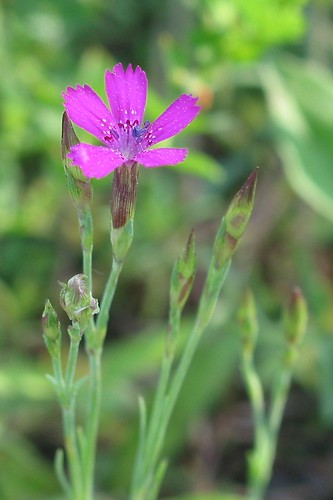
The star of the show this week is a tiny flower called Deptford Pink. This vibrant wildflower grows in the open area just past the community garden, but you'll have to look carefully! This picture was taken on June 13, 2007, but it is looking just as nice today!

Thursday, June 6, 2013

Wildflower Wednesday #8


Wednesday's wildflowers were spectacular as always!  The pungent Hawthorne flowers have already come and gone since last Wednesday.  But as the petals fall from the Hawthorne trees, the first daisies appeared near the community garden.  Birdsfoot Trefoil also put in its first appearance of the year.  Along the river, the pink blossoms of Dames Rocket and Ragged Robin.