|  Home  |   About us  |   Programs & Projects  |   Calendar  |   Birding  |   Blog  |   Get Involved  |

Wednesday, December 21, 2016

Plainfield Christmas Bird Count Results

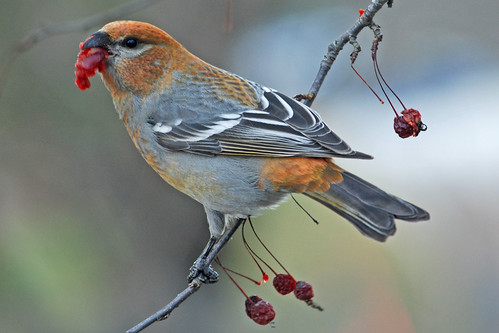
Pine Grosbeak put in its first appearance since 2012
Snow was the theme for the 55th Plainfield CBC this past Saturday, December 17, 2016. Weather is the biggest predictor of count productivity, and with snow throughout most of the day, it is not surprising that numbers were lower than usual. We ended up with several gaps in coverage due in part to the weather, but despite the challenging conditions, 30 participants managed to locate 37 species of birds, a little shy of our 10-year average of 39.1 species.

One of this year’s highlights was a Northern Flicker found in the Barre territory, only the 5th time recorded and the first since 2006. A lone Snow Bunting was our first since 2010. A Red-winged Blackbird in Plainfield-South territory was the 5th seen in the last 20 years, and the first since 2011. A total of 13 Pine Grosbeaks were seen in 3 territories, our first since 2012. Thanks in part to the owling efforts of Ken Benton, we set a new high count for Barred Owl of 4. Carolina Wren would have been unexpected 5 years ago, but has now become a regular occurrence with 1 individual found this year.

The most notable miss this year was Purple Finch, which had been seen every year since 2007. Purple Finches have become scarcer over the years, but after 252 reported last year, this was a disappointing miss. Other common species that were missed this year include Canada Goose, Hooded Merganser, and Pine Siskin. Only a single Ruffed Grouse was found in Lanesboro territory, a nice save considering we last missed Ruffed Grouse in 1985. Additional birds missed on count day but seen during count week were Northern Shrike, Bald Eagle, and Bohemian Waxwing.

The Plainfield count is blessed to have many passionate and dedicated volunteers, and this year we pay tribute to long-time volunteers Neil and Sharon Osborne. Together, they diligently covered a territory for the Plainfield CBC (most recently Hollister Hill) since 1989. After nearly 50 decades of enjoying birds with his wife Sharon, Neil passed away just this year. Neil had an incredibly keen eye and a passion for owls. Next time you hear or see a Barred Owl, be sure to remember Neil!

Mallard 41
Common Merganser 1
Ruffed Grouse 1
Wild Turkey 129
Sharp-shinned Hawk 1
Cooper's Hawk 1
Bald Eagle cw
Red-tailed Hawk 1
Rock Pigeon 245
Mourning Dove 118
Barred Owl 4
Downy Woodpecker 26
Hairy Woodpecker 30
Northern Flicker 1
Pileated Woodpecker 2
Northern Shrike cw
Blue Jay 90
American Crow 298
Common Raven 21
Black-capped Chickadee 807
Tufted Titmouse 13
Red-breasted Nuthatch 20
White-breasted Nuthatch 36
Brown Creeper 2
Carolina Wren 1
Golden-crowned Kinglet 7
American Robin 2
European Starling 55
Bohemian Waxwing cw
Cedar Waxwing 6
Snow Bunting 1
American Tree Sparrow 38
Dark-eyed Junco 22
Northern Cardinal 29
Red-winged Blackbird 1
Pine Grosbeak 13
House Finch 12
American Goldfinch 88
Evening Grosbeak 73
House Sparrow 12

Monday, December 19, 2016

Finding Light in the Dark


“Hey, something is following me…” We’re heading out to Deer Camp. The sun is shining, the mown path is unusually green in a meadow that has otherwise turned November brown, and the boy at the back of the line with me tugs on my hand and points behind him. Indeed. We are being followed.

By our shadows.

This was the spark. This playful observation inspired conversations, jokes and games that captivated the entire group. Strung out behind us in the low morning light, we were being stalked by our own shadows. But nothing is more delightful than shadow tag. Have you ever played it? We run, pounce, crouch, hide in the shade (“shadows can’t survive in the shade”) and leap out again. Chasing each other’s shadows became such a popular game this fall that there were even requests for it on overcast days...at which point we had to look sadly at the ground all around us and realize that this game came to us only under particular circumstances.


On rainy days we try to stay on the move. Moving bodies are warm bodies. So instead of heading straight to Deer Camp after Loose Parts, we take the long way through the meadow and visit the rock.  Everybody loves the rock.  It’s just big enough and steep enough that climbing it (and sliding down it) is challenging without being overwhelming. Often at Forest Preschool, the children naturally break into smaller configurations during play: swing or mud kitchen or Bear Hill.  But there is something about the rock that pulls the group together.

On this day, after a few minutes of exploration, the cry goes out. “Flood!” Water rushes in around our feet and everybody scrambles, panting to the top of the rock. Helping hands are extended to each other – “Pull!” “I’ve got you!” – and no sooner has everybody arrived safely at the pinnacle, than a shark is discovered in their midst and the children scatter again – a screaming, laughing panic and flurry of bodies.  We teachers try to mostly stand back and enjoy the commotion (though sometimes we are dragged to safety in the nick of time as well). 


These are the golden moments. When the children create their own play and immerse themselves in it.  Sometimes it’s an energetic game like Flood at the Rock; other times it can be something quieter, more solitary, maybe building a house or mixing mud smoothies. What’s most important is that the children are able to come to these imaginative moments. It is in these playful spaces, in what adults call “flow” that the brain lights up. This is where joy happens – and deep learning.  


As teachers, we make spaces, and sometimes we help connect the dots.  We create stories each week that are inspired by the discoveries and interests of the children, and we use them to make connections, expand ideas, ask more questions. The emergent “curriculum” this fall was also enriched by some planned events that all happened to circle around food and warming our bodies.  Nothing takes the chill off like pressing apple cider, cooking soup or popping popcorn over a fire.  Sumac tea made from sumac seeds harvested at the beaver pond was a new experience for most!


Now December brings us snow and more adventures together.  We’ll be digging shelters, sliding down hills, tracking animals – staying warm, and certainly finding some joy.

Friday, July 8, 2016

Inside Out

The Forest Preschool classroom changes every day.  Some of the changes are visible overnight, like when the pine trees release pollen that suddenly leaves a fine yellow dust on everything below, or when the puddle in our path that was dry yesterday is full today.  A late snow in April can bury the fresh green of spring grass, and snowsuits put away for the season must be pulled out one last time.

Other changes, though equally dramatic, happen in slow motion – like the transformation of the meadow through the seasons.  Four to five foot green and then goldenrod yellow tunnels snake through the meadow in the fall, flatten under winter snow into comparably expansive views that slowly disappear again in the spring as broken brown stalks are buried in the explosion of new green only a month later.  The grass seed heads in June look like mini firework displays.  

Our perspectives change with the view: as the meadow closes in around us again, we take our eyes off the hills and the clouds and birds and notice the developing leaves and flowers right beside us and we discover the numerous insects that live there.  

The forest classroom in the spring is no less dynamic.  Sunlight and ephemeral flowers both fade as the green canopy closes in over our heads, providing welcome shade as the spring days grow warmer.  Fiddleheads emerge from their papery nests in May and soar up over children's heads by June.  Trips to the “beaver” pond reveal plump, overwintered tadpoles – first seen under the ice in the fall – now growing legs. The river rises and retreats after each rain and the cobbled beach disappears and reappears with it.


These ongoing surprises and transformations in our environment are what make FPS unique.  All the ingredients for a rich, challenging and nurturing learning environment are imbedded in our “classroom” – in the beautiful fields and woods of the North Branch Nature Center.  Opportunities for spontaneous, trial and error experimentation abound; the details and complexities of nature feed the innate curiosity of the children and provide daily opportunities to explore and make connections. 
If “every child contains the basis for their own learning” (Christakis, xix), then the child’s environment essentially becomes the curriculum.  Here, in this environment, we find the space for exploring cause and effect, for challenging our bodies, for asking big questions and deducing answers, for imagining and creating, for sharing and connecting.  Relationships are formed and love grows – for each other and for the animals and plants around us.  


“Learning and love are mutually reinforcing concepts in the mind of a growing child,” says early childhood educator Erika Christakis.


A boy pauses in his play, gazes up at the forest around him and asks, “Do we help the trees when we play?”

Yes!  Yes, we do.


Cristakis, Erika. The Importance of Being Little, New York, New York: Viking, 2016.

Friday, June 3, 2016

BirdFest 2016 a Resounding Success!


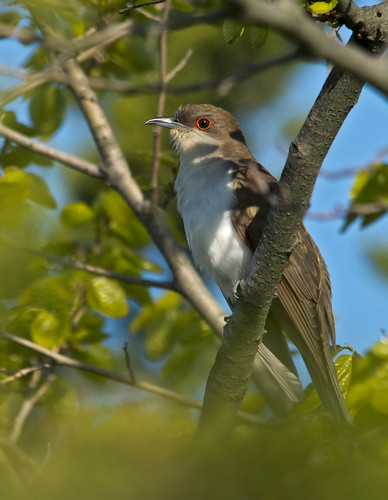
The morning kicked off at 7:00 am with a series of well-attended bird walks, for all ages and abilities. A highlight from the walks included a Black-billed Cuckoo that several groups were able to both hear and see. The walks culminated at 9:30, when Bridget Butler, The Bird Diva, gave her "Birdsong Tune-Up" walk and talk on birding by ear. 


Concurrently, NBNC staff ran a banding demonstration, and Outreach for Earth Stewardship introduced participants to rehabilitated hawks and owls. Nona Estrin, local author/illustrator and naturalist, gave a workshop on drawing birds in their natural habitats, and Sandy Parr, from the UVM Extension Master Gardeners gave a workshop on gardening for birds.

Under the main tent, participants learned about Bird-Friendly Maple Syrup, from Audubon Vermont, Bird-Friendly Coffee, from Birds and Beans, and voted for the winner of our annual bird photography contest. T-shirts with our 20th anniversary Kingfisher design and Raffle tickets for the Capital Campaign were both for sale.

Under the kid's tent, children turned into owls, as they decorated and wore masks and paper wings. They also built soda bottle bird feeders and construction paper bird ornaments. Families had the opportunity to  build a wren house to keep, or build a wood duck box that will be put up in North Branch River Park.

Wood-fired pizza was made and devoured on-site, donated by WoodBelly Pizza. Other food donations included ice cream from Arnie's Ice Cream, bagels from Maria's Bagels, cheese from Cabot Creamery, and cookies from Birchgrove Bakery. 

The day came to a close with a sobering talk about climate change and the future for tidal marsh birds, by NBNC Teen Naturalist Club alum Alyssa Borowske. Follwing remarks by Chip, prizes were handed out to the winners of our drawing and photography contests. In all, over 200 people were present, representing nearly 30 Vermont towns (plus a smattering of folks from as far as New Hampshire, Massachusetts, Montreal, Tennessee, and South Carolina!).

Thank you to all who volunteered, attended, and helped spread the word! We would also like to thank and acknowledge our sponsors who helped make BirdFest possible:


Rock of Ages
Jet Service
Borowske Chiropractic
Houghton Mifflin Harcourt

Bob's Camera
Birchgrove Bakery
Maria's Bagels
Red Hen
Cabot Cheese 
Woodbury Mt Toystore
Birds and Beans
The World
Arnie's Ice Cream 

Friday, March 11, 2016

Vermont Returns to the Superbowl

The team scans the dunes of Plum Island as the sun sets
Yes, the Superbowl (of football) was last month. And the Superbowl we'll be discussing here was the month before that. But it is never too late to share the exciting story of youth birders exploring the Massachusetts coast, and having a great time while doing it! Here is our belated report:

Superbowl of Birding XIII took place on January 30, 2016. In this 12-hour event, sponsored by Massachusetts Audubon, 23 teams competed to see which could see the greatest number of bird species and earn the most points. The point-value of each species varied by its rarity, with common species like chickadees worth 1 point and the rarest of species worth 5.

For the 7th year, a Vermont team competed in the Superbowl. Three youths and four adults awoke at 4 AM, and while they failed to find an owl in the pre-dawn hours, the morning light revealed a great variety of birds, including a 4-point Black-headed Gull and a 5-point Redhead duck in Gloucester. Working north along the coast towards Rockport, the team picked up some other nice birds on the ocean, including Thick-billed Murre, Harlequin Duck, Purple Sandpiper, Barrow’s Goldeneye, King Eider, and many others.

As the team continued its journey north, a number of valuable birds were spotted in Ipswich. A Turkey Vulture in January earned the team 5-points, and just minutes later, a 1st winter Red-headed Woodpecker put in an appearance… another 5 point bird. Four Snow Geese along RT133 were another nice surprise, earning the team another 4 points.


A rare Black-headed Gull puts on a show at Eastern Point
The team ended their day in the birding hotspot of Plum Island, where the lack of owls before dawn was made up for with 3 Short-eared Owls hunting over the marsh and a Snowy Owl perched prominently on the dike. As the sun went down, the team had tallied 59 species and 105 points. While not enough to win the competition, Vermont again put on a strong performance in the Superbowl of Birding and planning has already begun for next year’s event. 

Thursday, February 18, 2016

What We're doing in the Woods

North Branch Trekkers is an outdoor based after school group for children in grades 4 through 8, which meets every Thursday, throughout the school year… really, it is me and a bunch of kids goofing off in the woods.  But that goofing off is important.  When done in a thoughtful way, it builds a communal love for the outdoors and sense of place.


During Trekkers, we adopt an off trail mentality, using our local landscape to create opportunities to push our limits and go beyond our comfort levels.  We make it a point to venture away from the beaten path as we explore areas that many people have walked past but few have ventured into.  Stretching our limits together as a group strengthens our bond and sense of community.  It could be sledding down a 40 foot chute in the deepest recesses of Montpelier's forests, brushing past ancient hemlocks as you wiz by; or as simple as following a set of deer tracks as far as you can, leading you through frozen marsh and across steep ravines, post holing in snow up past your knees.  These are experiences that test both our mental and physical boundaries, pushing us right up against our comfort levels and beyond.  Sharing these experiences within the group strengthens our communal bond and utilizing the fields and forest in such a way makes the landscape as much of a character in our adventures as we are ourselves. 


As a part of our exploration of these unfamiliar areas, we take the time to observe who has been there.  One way that we do this via tracking.  Some kids are interested in taking measurements and analyzing the stride, straddle, and gait to figure out what animal made the tracks.  Others want to forge ahead and follow the trail as far as they can.  Every now and then we come across something that stops everyone.  It could be a kill site,  some sort of predator track, or a particularly large pile of scat.  To monitor high traffic areas that we come across in our travels, we set up motion activated trail cameras.  Part of our weekly routine is checking our cameras to see what has come to visit.  In four years, we have captured photo and video of deer, grey fox, coyote, bobcat, raccoon, skunk, fisher, mink, red squirrel, mouse, and shrew, all within the boundaries of the North Branch Nature Center property.

Often in our off trail adventures, we come across many examples of the great bounty that nature provides and with a group of young preteens after school, food is never far from our minds.  Wild grapes, choke cherries, beaked hazelnuts, hawthorn haws, apples, wild leeks, and the sap of sugar maples have all played an integral part in our gastrological education.  We taste the seasons as they come and go; grazing on grapes and roasting apples in the fall, boiling sap and "taking leeks" in the late winter/early spring.  

Every semester has its culminating feast.  In the fall we cook a Thanksgiving dinner which we have dubbed "Trekkers-giving".  Everyone brings something that can be cooked over the fire.  This past year, we have made a critical addition to our Trekkers' community.  His name is Hansel the Griddle.  Hansel is a flat piece of slate that one of our Trekkers found over the summer and thoroughly dried out to avoid cracking when exposed to direct heat.  A special nook was carved out in our fire pit for Hansel to preside over, where we can keep him warm by raking hot coals underneath.  He is often lathered in melted butter and fed delicious sliced apples and pancake batter.  He has  become an integral member of our gang and allowed us to truly expand our culinary horizons.


March is time for sugaring.  Cutting firewood, carving staghorn sumac branches into spiles, tapping trees and collecting sap, the Trekkers do all of the work themselves.  Using a pot suspended over the campfire with a tripod of three alder trunks lashed together, last year we boiled down enough sap to produce 3/4 gallon of maple syrup.  This syrup served as the fuel for our most anticipated feast of the year... the annual Trekkers pancake banquet.  Pancakes are fried up in small camping pans over the fire.  Apples and bread are roasted on sticks, then topped with a drizzling of fresh maple syrup.  Just when you think it couldn't get any better, someone breaks out the Italian sausages.  They are boiled in a pot of maple sap, then skewered and held over the flame to caramelize the sugars from the sap.  The result is a juicy mouthful of meaty mapley goodness that will be forever etched into you taste buds.  The food is truly delicious, but the most important spice used in any of our feasts is the weeks of work put into the preparing of the meal, starting with the first cut of firewood.


So why do we do all of this?  What we are really doing is creating memories.  These memories will be even stronger and longer lasting having been formed within a community of peers - friends growing up together, romping in the forest.  The groundwork for nostalgia is being laid here.  When these kids are grown and have children of their own, they will look back upon this time spent in the woods and want to recreate it for them; passing down a love for the outdoors from one generation to the next.  This is how we create a culture that appreciates and protects natural places... and it all starts with a little goofing off in the woods.


Tuesday, February 2, 2016

Touch


If children play to change, then could there be a better companion than snow for this journey? 


 It falls, melts, freezes, hardens, disappears...Snow, in its bittersweet ephemerality, in its malleable, movable nature, transforms the world outdoors into one giant sandbox.  


The senses of smell, sound, taste, even sight are diminished in winter as normally fertile nature is buried in insulating white.  But touch.  Touch reigns and the children of Winter Whispers are taking full advantage of winter’s tactility.  


Padded in many layers of protective clothing, the children roll and slide and shovel and build.  Icy wind nips cheeks and noses, but core temperatures are warm and the outside world is their oyster.  


Snow.  Catch it if you can.


Saturday, December 19, 2015

Plainfield Christmas Bird Count - Results

Date: 12/19/2015
Temperature: 22F / 35F
Number of Participants: 42

Canada Goose 491
Mallard 16
Canvasback 1
Ring-necked Duck 3
Lesser Scaup 2
Hooded Merganser 4
Common Merganser 7
Ruffed Grouse 13
Wild Turkey 210
Cooper's Hawk 2
Bald Eagle 1
Red-tailed Hawk 7
Ring-billed Gull 4
Rock Pigeon 266
Mourning Dove 118
Barred Owl 3
Red-bellied Woodpecker 1
Downy Woodpecker 38
Hairy Woodpecker 29
Pileated Woodpecker 4
Northern Shrike 1
Blue Jay 189
American Crow 1751
Common Raven 56
Black-capped Chickadee 965
Tufted Titmouse 31
Red-breasted Nuthatch 66
White-breasted Nuthatch 65
Brown Creeper 3
Carolina Wren 3
Golden-crowned Kinglet 12
American Robin 36
European Starling 418
Cedar Waxwing 1
American Tree Sparrow 27
Dark-eyed Junco 123
White-throated Sparrow 1
Northern Cardinal 42
Brown-headed Cowbird 1
House Finch 4
Purple Finch 252
Pine Siskin 85
American Goldfinch 479
Evening Grosbeak 1
House Sparrow 147

Friday, December 11, 2015

Dinosaurs at NBNC

Heart thumping, legs stretching, a forest preschooler slides into the den between two trees at deer camp, narrowly escaping a friend in pursuit.  Safe…for now.  The fox stalks outside, sniffing, searching, but the mouse is out of sight.


At Forest Preschool this fall many engaging games emerged around the predator/prey relationship.  Camouflage, in particular, was a favorite activity on our morning walk through the meadow.  Some days the children became coyotes and rabbits; other days they transformed into hawks and mice or into a flock of hungry crows in a farmer’s field.  The children invented multiple scenarios and never tired of sneaking and hiding and being chased. 

 Along with the familiar Vermont animals, there was another creature that accompanied us on our journeys: this one larger and hungrier than all the others.  Dinosaurs metamorphosed almost daily out of predator or prey; a hunted mouse could easily transform before our eyes into a fearsome t-rex that then became the hunter. 

Excited to explore the activities and habits of the animals that actually share our home with us, I initially resisted the persistent appearance of this bygone reptile in our adventures.   What do dinosaurs have to do with where we are right now, I wondered?  So I kept watching and I began to understand that the dinosaurs are very much a part of the ecology at NBNC, that is, the inner ecology of the children who play here.  Dinosaurs are the allies of young children who, due to their size and age, inherently face new situations that can be scary and challenging on a regular basis.  As growing, developing human beings, children desire and need to take risks…healthy risks.  And that is where the dinosaurs come in.  T-rex’s are fearsome creatures but unlike wolves and bears (or zombies), they are undeniably extinct and therefore, safe.  There is no chance of bumping into a stegosaurus in the goldenrod.  The only thing that gives it life is imagination and the children are fully in charge of that.  Healthy risk – climbing trees, sliding down hills, balancing on logs – can be scary, but like the dinosaurs, just scary enough…for growth and learning. 


At Forest Preschool, the children learn to calculate and navigate manageable risk in their play.  As their teachers it is our job to enable that stretching process and ensure their safety.  It is through their own self-chosen exploration that they will develop the resilience and self-reliance so important to life.


 Learning is exciting.  And risky.  And the dinosaurs are there to help.

Wednesday, December 2, 2015

Warmth: is it learned or instinctual?

In first grade at ECO, foundations for surviving winter are essential. Beyond learning how to layer our bodies in warm clothing and boots, we discover countless ways to stay warm in the woods. We use our internal fire to share a song and warm ourselves by the communal fire. We gather together and notice one another in the light of the fire's warmth.


We use the fire's alchemy to roast apple quarters, warm our salt dough sculptures and make popcorn.


While some of us sit by the fire to warm our bodies, others self-organize when invited to build a fort in the woods. These children relocate hefty tree trunks as material for the base of their fort. Among cries of excitement, we hear, "Okay, everyone drop it!" and "Go find another one!". Leaders emerge as loud voices are welcomed in this heavy duty labor of the vast forest. This instinct to move wood not only warms the body, it establishes a pattern for future woodchuck-ing, or preparing the woodpile for winter. Warmth: is it learned or is it instinctual?


There are many important ways to warm oneself during the seasonal dark of winter in Vermont!

Tuesday, November 24, 2015

Stone Soup

On a Tuesday and Thursday morning at Forest Preschool two weeks ago, water and a stone were settled into a suspended pot and a fire was lit below. Then, the story of Stone Soup, an old folk story about cooperation, was told. Forest Preschool is a place where cooperation grows. The fields and forest lend themselves beautifully to the many possibilities and benefits of cooperation. Cooking outdoors over a fire is no exception.

And so, on a November morning, children brought in vegetables from home and made a meal together. With some special stone magic, they learned about cooperation and tasted the outcome of their combined contributions.  "We're going to cook soup outside?" asked a child. Yes, we are and we're going to do it together.

Forest Preschool is also a place that embraces fire as a teaching tool. Fire warms us in the woods when we're greeted by chilly autumn mornings. It is also a necessary ingredient for cooking stone soup.

Once water was put on to boil, an outdoor kitchen was assembled and the chopping of vegetables ensued.

Listening to the story of Stone Soup as water and stone came to a boil in the pot.

The outdoor kitchen. They could have chopped all day!  

"What can I chop now?"
Many children were very interested in chopping and preparing the vegetables. Others played in the mud kitchen or engaged in imaginary animal play in the woods. Those interested in becoming a chef used preschool appropriate cutting tools. Some were forlorn when we exhausted our cutting opportunities. Excitement flowed again, though, when it was time to add the cooperatively prepared veggies to the pot.

"Look at my potato!"

Is the soup ready yet?

While the pot boiled, some children used the compost from veggie prep to create another version of stone soup, complete with mud and pine needles.

Almost ready!

Look at the colors!

Soup is served!

Enjoying the fruits of our labor. "Stone soup is good!"
Nearly every child ate the soup we made together and many asked for seconds. Food that you help prepare seems to taste extra good, especially food that is made over a fire outside, together. 

Enjoy the food that you make or is made on Thanksgiving! There is so much to be thankful for this fall!


Tuesday, November 17, 2015

A Parent's Perspective

A letter Cassie Bickford, a parent and proud ECO supporter in Marshfield, wrote in support of a grant for ECO: 

Three years ago the ECO program was introduced to the students at Twinfield Union School and at first the program seemed unusual and daunting. My first thoughts were about exposing children to the cold as it began in late fall and some days were frightfully chilly. I fretted just as much about how to keep their soup warm as I did their bodies. The packing list for warm clothes seemed just as overwhelming to remember as to afford for a family with multiple children participating. The program immediately proved itself worthy of the cost and fret.

The first day of ECO, my youngest participating child came home so excited that he could hardly sequence his thoughts in a fashion in which we could understand them. Luckily, the glow on his face spoke louder than his jumbled thoughts. The next oldest told me exciting things he was able to learn and that soon they would be learning to build a fire. My oldest had similar tales and the same glow shining through.
I fully support the ECO program at Twinfield.  The children have learned many things, although I assure you they do not see it as learning but more as a fun exploration. Over the past two years my children have taught me many things about the animals around us, the vegetation around us, what is edible in the woods, and which plants you can make tea out of. In fact, the youngest says his favorite part, next to catching his own “claw-fish” (a crayfish) with his bare hands (see photo above), is making pine needle tea.
When my second oldest is asked his favorite thing about ECO he says “everything, but especially the warm fires and building structures”. My oldest was not participating last year due to her grade level and expressed a longing for the program. 
Not once have my children complained that it was too cold or their soup not warm enough, they are having too much  fun to have noticed either way.